Natural ventilation remains one of the most sustainable strategies for maintaining indoor comfort while reducing energy consumption in residential buildings worldwide.

As climate concerns intensify and energy costs continue rising, homeowners and architects are rediscovering the value of passive design strategies that harness natural airflow patterns. Advanced computational modeling techniques now enable precise optimization of ventilation performance, transforming traditional approaches into data-driven design solutions that deliver measurable improvements in both thermal comfort and air quality.
The integration of sophisticated airflow simulation tools with contemporary building design has opened new possibilities for creating homes that breathe naturally, reducing dependence on mechanical systems while maintaining optimal indoor environments. This convergence of ancient wisdom and modern technology represents a paradigm shift in how we conceptualize and implement natural ventilation strategies.
🌬️ Understanding the Fundamentals of Natural Ventilation Dynamics
Natural ventilation operates through two primary mechanisms: wind-driven ventilation and buoyancy-driven ventilation, commonly known as the stack effect. Wind-driven ventilation occurs when pressure differences created by wind movement around a building force air through openings, while stack ventilation relies on temperature-induced density differences that cause warm air to rise and exit through higher openings.
The effectiveness of natural ventilation depends on multiple interconnected factors including building orientation, window placement, opening sizes, internal layout configurations, and surrounding landscape features. Traditional design approaches relied heavily on rules of thumb and empirical observations, which often produced inconsistent results across different climatic conditions and building typologies.
Modern computational fluid dynamics (CFD) modeling has revolutionized our ability to predict and optimize these complex airflow patterns before construction begins. These advanced simulation techniques allow designers to visualize air movement throughout spaces, identify stagnant zones, and refine design elements to maximize ventilation effectiveness.
The Evolution of Airflow Modeling Technologies
Early attempts at quantifying natural ventilation relied on simplified mathematical equations and physical scale models tested in wind tunnels. While these methods provided valuable insights, they were time-consuming, expensive, and limited in their ability to account for the full complexity of real-world conditions.
The development of accessible CFD software in recent decades has democratized advanced airflow analysis, making sophisticated modeling capabilities available to a broader range of design professionals. These tools solve the Navier-Stokes equations governing fluid motion, producing detailed three-dimensional visualizations of velocity fields, pressure distributions, and air exchange rates.
Contemporary modeling platforms integrate weather data, thermal calculations, and occupancy patterns to provide comprehensive assessments of ventilation performance across different seasons and usage scenarios. This holistic approach ensures that design decisions consider the full spectrum of conditions a building will experience throughout its lifecycle.
Strategic Design Principles for Optimal Airflow Performance
Successful natural ventilation design begins with understanding prevailing wind patterns at the building site. Orientation decisions should maximize exposure to favorable breezes while providing protection from undesirable winds. Advanced modeling allows designers to test multiple orientation scenarios and quantify their impact on indoor air movement.
Cross-ventilation, achieved by positioning inlet and outlet openings on opposite or adjacent walls, remains one of the most effective natural ventilation strategies. Modeling studies consistently demonstrate that cross-ventilation can achieve air change rates four to five times higher than single-sided ventilation in comparable conditions.
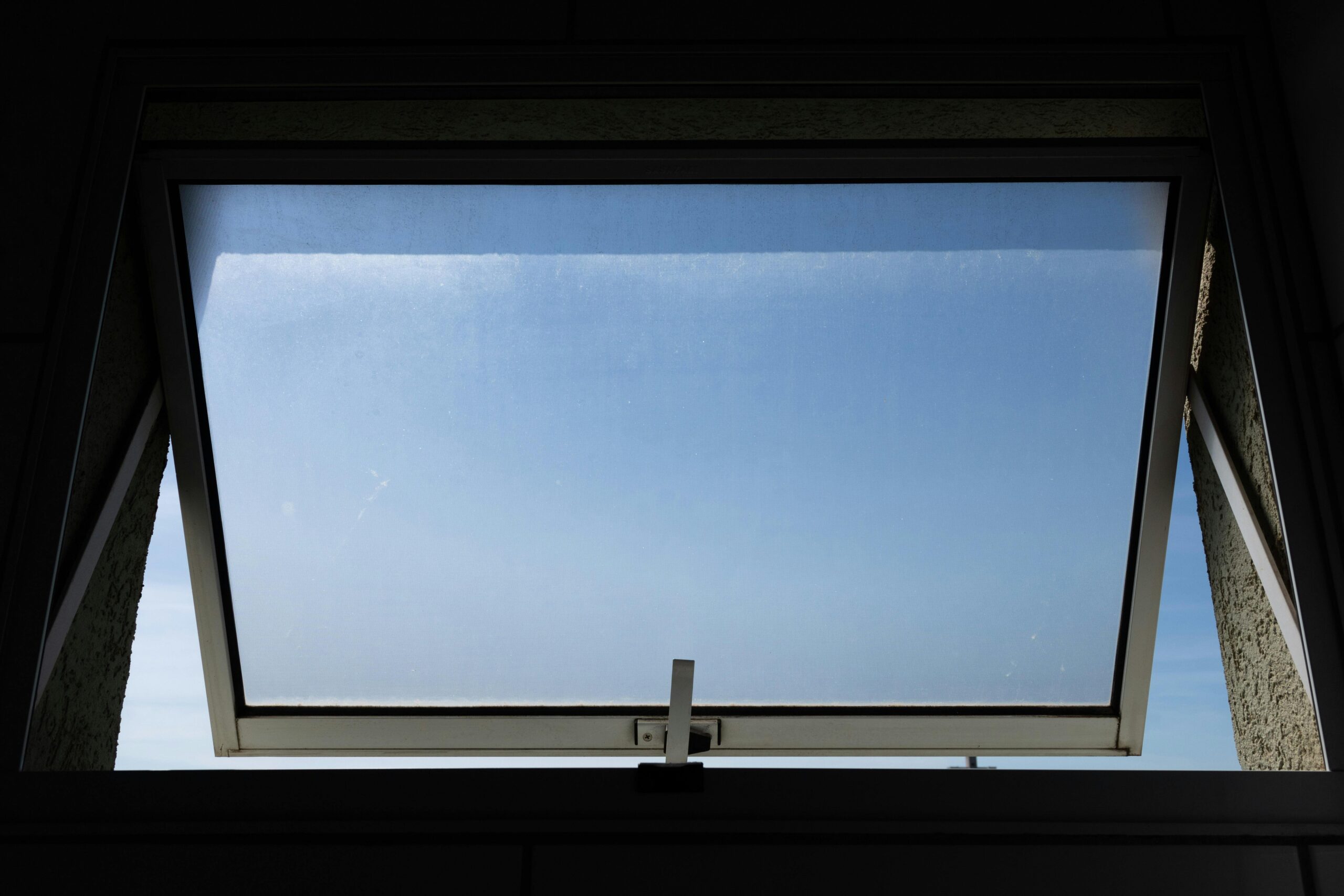
The size, shape, and position of openings significantly influence airflow characteristics. Larger openings generally permit greater airflow volumes, but optimal performance requires careful balancing of inlet and outlet areas. Modeling reveals that outlet openings should typically be slightly larger and positioned higher than inlets to maximize air exchange efficiency.
Leveraging Vertical Stratification and Stack Effects
Vertical temperature gradients within buildings create natural pressure differences that drive buoyancy ventilation. Strategic placement of high-level exhausts allows warm, stale air to escape while drawing cooler fresh air through lower openings. This principle proves particularly effective in buildings with significant internal heat gains or multi-story configurations.
Modeling techniques can optimize the height difference between inlets and outlets to maximize stack pressure, even in single-story buildings. Studies show that vertical separations as modest as 1.5 to 2 meters can generate meaningful buoyancy-driven flows, especially during periods of minimal wind.
Architectural features such as clerestory windows, solar chimneys, and ventilation towers enhance stack ventilation performance by extending the effective height difference and capturing solar heat gain to amplify buoyancy forces. Advanced modeling helps designers optimize these elements for specific climatic conditions and building programs.
📊 Quantifying Comfort: Beyond Simple Air Changes
Traditional ventilation metrics focused primarily on air change rates—the number of times per hour the entire air volume is replaced. While this measure provides useful information about overall ventilation capacity, it fails to capture the quality of air distribution or occupant comfort levels.
Contemporary assessment methods incorporate more sophisticated metrics including local mean age of air, ventilation effectiveness indices, and predicted percentage of dissatisfied (PPD) calculations based on local velocity and temperature conditions. These refined measures better correlate with actual occupant comfort experiences and enable more targeted design improvements.
Computational modeling facilitates the calculation of these advanced metrics throughout occupied spaces, revealing subtle performance variations that simpler analysis methods would miss. This granular understanding supports evidence-based design decisions that directly enhance comfort outcomes.
Addressing Thermal Comfort in Naturally Ventilated Spaces
Thermal comfort in naturally ventilated buildings involves complex interactions between air temperature, radiant temperature, humidity, and air velocity. Elevated air movement can offset higher temperatures through convective cooling, expanding the acceptable temperature range in naturally ventilated spaces compared to mechanically conditioned environments.
The adaptive comfort model recognizes that occupants in naturally ventilated buildings accept and prefer wider temperature variations, particularly when they have control over openings. Modeling approaches that integrate thermal and airflow simulations can predict adaptive comfort conditions and optimize designs to maximize the hours when natural ventilation alone provides acceptable comfort.
Seasonal variations demand flexible ventilation strategies that can be adjusted for changing conditions. Modeling different operational scenarios—from summer cooling mode with maximum openings to winter ventilation with restricted openings—ensures designs perform effectively year-round.
Practical Implementation of Modeling Insights
Translating modeling results into built reality requires careful consideration of constructability, cost implications, and user operation. The most theoretically optimal solution provides little value if occupants find it confusing to operate or if construction budgets cannot accommodate specialized components.
Successful implementation typically involves iterative refinement, where initial modeling identifies promising strategies that are then evaluated for practical feasibility, revised based on constraints, and re-modeled to confirm performance. This cyclical process balances theoretical performance with real-world considerations.
Simple interventions often yield substantial improvements. Modeling frequently reveals that modest adjustments to window sizes, positions, or opening mechanisms can dramatically enhance ventilation effectiveness without major cost increases. These high-impact, low-cost modifications represent the most valuable design insights modeling can provide.
Integrating Landscape and External Elements
The environment surrounding a building profoundly influences natural ventilation performance. Trees, neighboring structures, topography, and landscape features modify wind patterns, create shade that reduces heat gain, and filter incoming air. Advanced modeling domains should extend well beyond building boundaries to capture these contextual effects.
Strategic landscaping can channel breezes toward building openings, create positive pressure zones on windward facades, and provide evaporative cooling through vegetation. Modeling studies demonstrate that properly positioned windbreak plantings can actually improve ventilation by reducing turbulence and directing airflow more uniformly toward openings.
Urban contexts present particular challenges and opportunities for natural ventilation. Tall surrounding buildings create complex wind patterns with localized acceleration zones and wind shadows. Detailed modeling of these urban canyon effects enables designers to identify optimal opening locations that capitalize on available airflow despite challenging conditions.
🔧 Selecting Appropriate Modeling Tools and Approaches
The market offers numerous CFD platforms ranging from highly specialized research codes to user-friendly interfaces designed for practicing architects. Selecting appropriate tools depends on project complexity, required accuracy, available expertise, and budget constraints.
Simplified network models calculate airflow through buildings by treating openings as discrete connections between zones, using empirical coefficients to estimate flow rates based on pressure differences. These approaches run quickly and provide reasonable accuracy for preliminary design studies, though they cannot visualize detailed spatial flow patterns.
Full CFD simulations solve governing equations across three-dimensional computational meshes, producing detailed visualizations of velocity vectors, pressure fields, and contaminant dispersion. These sophisticated analyses demand greater computational resources and user expertise but deliver insights impossible to obtain through simplified methods.
Validation and Quality Assurance in Modeling Workflows
All models simplify reality through assumptions and approximations. Understanding these limitations and validating results against experimental data or analytical benchmarks ensures modeling insights remain reliable. Responsible modeling practice includes sensitivity analyses that test how results vary with input uncertainties.
Comparison with published experimental studies, wind tunnel measurements, or full-scale monitoring data from similar building types provides confidence in modeling approaches. Many modeling platforms have been extensively validated against reference cases, but each specific application introduces unique conditions that may affect accuracy.
Grid independence studies, where mesh resolution is progressively refined until results stabilize, confirm that computational discretization does not artificially limit accuracy. Boundary condition sensitivity tests ensure that domain size and inlet specifications adequately represent atmospheric conditions without introducing artifacts.
Economic and Environmental Returns on Investment
The costs associated with advanced modeling represent a small fraction of total project budgets, while the potential benefits include significant long-term energy savings, improved occupant satisfaction, and enhanced building resilience. Economic analyses consistently demonstrate favorable returns on investment when modeling informs early-stage design decisions.
Buildings optimized for natural ventilation can reduce or eliminate mechanical cooling requirements, particularly in moderate climates. Energy modeling studies that couple airflow and thermal simulations quantify these savings, providing compelling financial justifications for design features that enhance natural ventilation.
Beyond direct energy savings, naturally ventilated buildings often command premium rents or sale prices due to improved indoor environmental quality, connection to outdoors, and sustainability credentials. These market advantages further strengthen the economic case for investing in optimization modeling during design phases.
Contributing to Climate Resilience and Sustainability Goals
As electrical grids face increasing strain from climate extremes and growing cooling demand, buildings that can maintain comfort through passive means enhance community resilience. Natural ventilation provides fail-safe operation during power outages and reduces peak demand when grid resources are most constrained.
The embodied carbon associated with mechanical ventilation equipment and the ongoing emissions from electricity consumption make naturally ventilated solutions attractive from lifecycle carbon perspectives. Modeling-optimized designs maximize these environmental benefits while ensuring reliable comfort performance.
Green building certification programs increasingly recognize natural ventilation performance through credits and prerequisites. Detailed modeling documentation supports applications for LEED, BREEAM, Living Building Challenge, and other sustainability frameworks, potentially achieving higher certification levels.
Future Directions in Ventilation Optimization
Emerging technologies promise to further enhance natural ventilation design and operation. Machine learning algorithms trained on extensive modeling datasets can rapidly predict ventilation performance for new designs, accelerating early-stage optimization. Real-time sensor networks coupled with predictive models enable adaptive control strategies that automatically adjust openings based on current and forecast conditions.
Integration with building information modeling (BIM) platforms streamlines the modeling workflow, automatically extracting geometry and material properties from design models while feeding optimization results back into the coordinated building model. This seamless integration reduces setup time and ensures consistency between design documentation and analysis models.
Parametric design approaches combined with optimization algorithms can automatically explore thousands of design variations, identifying solutions that optimally balance ventilation performance with other objectives such as views, daylighting, structural efficiency, and cost. These generative design methods discover non-intuitive solutions human designers might overlook.
🏡 Transforming Theory Into Livable Reality
The ultimate measure of success lies not in simulation predictions but in lived experience. Post-occupancy studies that monitor actual building performance and survey occupant satisfaction provide invaluable feedback that validates modeling approaches and informs future design improvements.
Occupant behavior significantly influences natural ventilation effectiveness. Even perfectly designed systems underperform if occupants keep windows closed due to noise concerns, security fears, or simple inconvenience. Successful projects address these human factors through thoughtful design of opening mechanisms, security features, and user education.
The integration of advanced modeling techniques into natural ventilation design represents more than technological progress—it embodies a fundamental shift toward evidence-based, performance-oriented design cultures. As these methods become standard practice, the resulting buildings deliver measurably better comfort, lower environmental impact, and enhanced resilience.
Natural ventilation optimization through advanced modeling techniques offers a compelling pathway toward more sustainable, comfortable, and economically viable residential buildings. By combining timeless passive design principles with contemporary computational capabilities, designers can create homes that work in harmony with natural forces rather than against them, delivering superior performance while treading more lightly on our planet.