Smart lighting controls are revolutionizing how homes and businesses manage electricity consumption, offering unprecedented opportunities to reduce energy bills while enhancing convenience and comfort.

💡 The Evolution of Lighting Technology and Energy Consumption
The lighting industry has undergone a remarkable transformation over the past two decades. Traditional incandescent bulbs, which converted only 5% of energy into light while wasting the rest as heat, have gradually given way to more efficient alternatives. Today’s LED technology combined with intelligent control systems represents the pinnacle of this evolution, delivering not just better light quality but substantial cost savings that can transform your monthly energy expenses.
Lighting typically accounts for approximately 15-20% of residential electricity consumption and up to 40% in commercial settings. This significant portion of energy usage presents an enormous opportunity for savings through smart technology implementation. The transition from conventional switching to intelligent lighting management isn’t merely about upgrading bulbs—it’s about fundamentally reimagining how we interact with and optimize our lighting infrastructure.
Understanding Smart Lighting Control Systems
Smart lighting controls encompass a range of technologies designed to automate, optimize, and customize lighting based on actual needs rather than arbitrary schedules or manual operation. These systems integrate sensors, timers, dimmers, and connectivity features that work together to ensure lights operate only when and where needed, at the appropriate intensity levels.
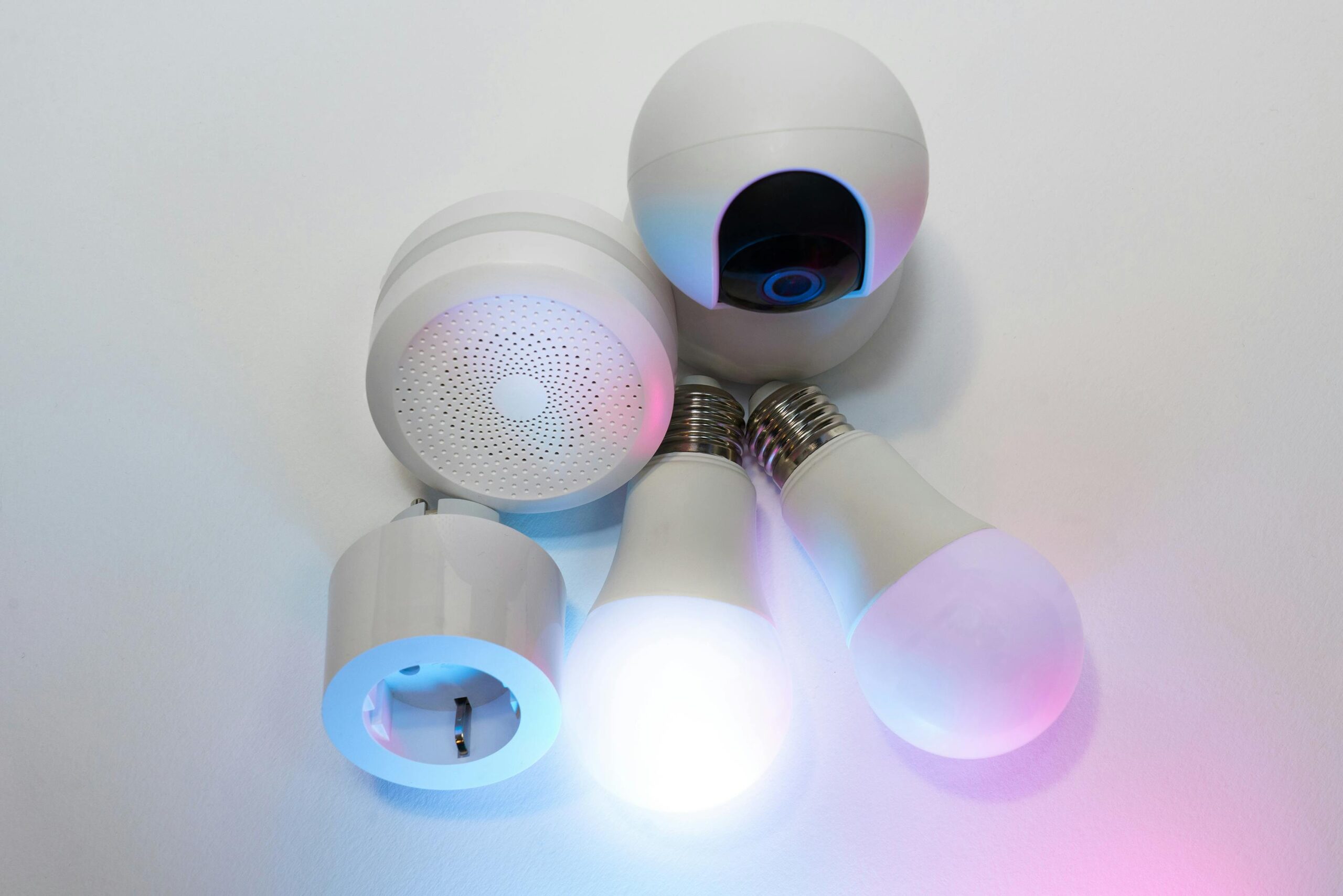
The core components of smart lighting systems include LED bulbs with embedded wireless capabilities, hub devices that coordinate communication between components, sensors that detect occupancy and ambient light levels, and software applications that enable user control and automation programming. When properly configured, these elements create an ecosystem that learns from usage patterns and adapts to maximize efficiency.
Types of Smart Lighting Controls
Motion sensors represent one of the most straightforward yet effective control mechanisms. These devices detect movement within designated areas and activate lights accordingly, ensuring illumination only when spaces are occupied. Advanced models can distinguish between different types of motion and adjust sensitivity to prevent false triggers while maintaining reliable operation.
Daylight harvesting systems use photosensors to measure natural light availability and automatically dim or brighten artificial lighting to maintain consistent illumination levels. This technology proves particularly valuable in spaces with windows or skylights, where natural light fluctuates throughout the day. The system continuously adjusts electrical lighting to complement available daylight, significantly reducing unnecessary energy consumption during bright conditions.
Scheduling controls allow users to program lighting operations based on time of day, day of week, or seasonal variations. These systems can automatically turn lights on before occupants arrive and off after departure, ensuring spaces are never unnecessarily illuminated during unoccupied periods.
Dimming capabilities provide perhaps the most intuitive energy-saving opportunity by allowing users to reduce light output when full brightness isn’t required. Modern LED dimmers offer smooth operation across a wide range of intensities, and since energy consumption decreases proportionally with light output, dimming to 50% intensity typically reduces energy use by approximately 50%.
📊 Quantifying the Financial Benefits
The economic case for smart lighting controls becomes compelling when examining actual savings data. Studies conducted across various building types consistently demonstrate energy reductions ranging from 30% to 70% compared to conventional lighting systems, with the variance depending on the building type, usage patterns, and specific technologies deployed.
For a typical household spending $200 monthly on electricity with lighting representing 20% of that cost, implementing comprehensive smart lighting controls could reduce the lighting portion from $40 to between $12 and $28 monthly. This translates to annual savings of $144 to $336 specifically from lighting optimization, with payback periods for system installation typically ranging from 1.5 to 3 years depending on system complexity and home size.
Commercial applications show even more impressive returns. A medium-sized office building consuming 100,000 kWh annually for lighting at an average rate of $0.12 per kWh spends $12,000 yearly on illumination. Smart controls reducing consumption by 50% would save $6,000 annually, easily justifying the initial investment in control infrastructure within the first year or two of operation.
Beyond Direct Energy Savings
The financial benefits extend beyond reduced electricity bills. LED bulbs controlled by smart systems experience less operational stress due to optimized usage patterns, dimming capabilities, and elimination of the damaging effects of frequent on-off cycling. This extended lifespan reduces replacement costs and maintenance labor, particularly significant in commercial settings with hundreds or thousands of fixtures.
Many utility companies offer rebates and incentives for installing energy-efficient lighting controls, sometimes covering 20-50% of project costs. These programs recognize the grid-level benefits of reduced peak demand and overall consumption, making adoption more financially attractive for consumers while supporting broader energy conservation goals.
🏠 Implementing Smart Lighting in Residential Settings
Homeowners can approach smart lighting implementation incrementally, starting with high-use areas that offer the greatest savings potential. Common spaces like living rooms, kitchens, and outdoor lighting typically operate many hours daily and represent prime candidates for initial upgrades.
Smart bulbs offer the simplest entry point, requiring no additional hardware beyond the bulbs themselves and a smartphone for control. These self-contained units connect directly to home WiFi networks and can be controlled individually or grouped for coordinated operation. While slightly more expensive than standard LEDs, smart bulbs eliminate the need for replacing existing switches or installing additional control hardware.
Smart switches and dimmers provide an alternative approach, replacing conventional wall switches with intelligent versions that control standard LED bulbs. This option works well when multiple bulbs in a fixture need coordinated control and can be more cost-effective for rooms with numerous light sources.
Comprehensive whole-home systems integrate lighting control with other smart home functions like security, climate control, and entertainment systems. These platforms offer the most sophisticated automation possibilities, including complex scenes that adjust multiple parameters simultaneously and integration with voice assistants for convenient control.
Practical Installation Considerations
Before purchasing components, homeowners should assess their existing infrastructure. Older homes may have incompatible wiring that complicates smart switch installation, particularly where neutral wires are absent from switch boxes. Smart bulbs bypass this limitation by requiring only a functioning light socket, making them ideal for challenging electrical configurations.
Network reliability proves crucial for smart lighting performance. Systems dependent on WiFi connectivity require strong signal coverage throughout the home, potentially necessitating range extenders or mesh network systems in larger residences. Alternatively, platforms using dedicated protocols like Zigbee or Z-Wave create their own mesh networks, often providing more reliable connectivity specifically for smart home devices.
🏢 Commercial and Industrial Applications
Businesses face different lighting challenges and opportunities compared to residential users. Operating hours extend longer, spaces are larger and more diverse, and the financial stakes are considerably higher. These factors make professional lighting control systems essential rather than optional for cost-conscious organizations.
Warehouses and manufacturing facilities benefit tremendously from occupancy-based controls given their vast spaces with intermittent usage patterns. Implementing high-bay LED fixtures with integrated sensors ensures lighting activates only in occupied zones, preventing the common scenario of entire facilities remaining fully illuminated despite minimal activity in most areas.
Retail environments use smart lighting not only for energy savings but also to enhance customer experiences and influence shopping behavior. Dynamic lighting programs can adjust color temperature and intensity throughout the day, creating inviting atmospheres during peak hours while reducing consumption during slower periods. Task-specific lighting highlights merchandise while reducing overall ambient lighting requirements.
Office buildings represent ideal candidates for comprehensive lighting control systems. The combination of predictable occupancy patterns, substantial window areas for daylight harvesting, and diverse space types creates numerous optimization opportunities. Open office areas, conference rooms, private offices, and common spaces each benefit from tailored control strategies that balance energy efficiency with occupant comfort and productivity.
⚙️ Advanced Features Maximizing Efficiency
Contemporary smart lighting platforms incorporate increasingly sophisticated capabilities that push efficiency beyond basic on-off automation. Adaptive algorithms learn from historical usage patterns and automatically adjust programming to match actual needs rather than relying solely on predetermined schedules.
Geofencing technology uses smartphone locations to determine when occupants are approaching or leaving, triggering appropriate lighting responses. Arriving home to a welcoming, well-lit environment requires no manual intervention, yet lights automatically turn off when the last occupant departs, eliminating waste from forgotten switches.
Integration with other building systems creates synergies that amplify energy savings. Lighting coordinated with HVAC systems can reduce cooling loads by minimizing heat generation from fixtures. Security system integration ensures appropriate lighting during alarm conditions while maintaining efficient operation during normal circumstances.
Color tuning capabilities allow systems to adjust light color temperature throughout the day, mimicking natural daylight patterns. Morning light with higher blue content promotes alertness, while warmer evening tones support relaxation and circadian rhythm alignment. This dynamic tuning enhances occupant wellbeing while operating at optimal efficiency for each condition.
🔧 Overcoming Common Implementation Challenges
Despite clear benefits, smart lighting adoption faces obstacles that can discourage potential users. Initial costs represent the most obvious barrier, particularly for comprehensive systems requiring professional installation. However, careful analysis of total cost of ownership including energy savings, maintenance reductions, and available incentives typically reveals favorable economics over reasonable timeframes.
Compatibility concerns arise when integrating components from multiple manufacturers or adding smart lighting to existing home automation platforms. Choosing systems supporting open standards like Zigbee, Z-Wave, or Matter helps ensure interoperability and protects against vendor lock-in that could complicate future upgrades.
User interface complexity can overwhelm occupants unfamiliar with smart technology, leading to improper use that negates efficiency benefits. Successful implementations prioritize intuitive design, provide adequate training, and maintain manual override capabilities that ensure lighting remains functional even when automation systems malfunction.
Privacy and Security Considerations
Connected lighting systems generate data about occupancy patterns and usage behaviors that could raise privacy concerns if mishandled. Responsible implementation requires selecting manufacturers with transparent data policies, using local control options when possible rather than cloud-dependent systems, and maintaining network security through strong passwords and regular firmware updates.
The potential for hacking or unauthorized access exists with any internet-connected device. Isolating smart home devices on separate network segments, disabling unnecessary remote access features, and choosing products from reputable manufacturers with strong security track records helps mitigate these risks.
🌍 Environmental Impact Beyond Energy Savings
The environmental benefits of smart lighting controls extend well beyond individual electricity bill reductions. Collectively, widespread adoption significantly decreases grid demand, reducing the need for peak power generation that typically relies on less efficient and more polluting sources. Lower overall energy consumption diminishes fossil fuel consumption and associated greenhouse gas emissions.
Extended bulb lifespans resulting from optimized usage reduce manufacturing demand and waste generation. Given that lighting products contain various materials requiring energy-intensive production processes, using fewer bulbs over time delivers meaningful environmental benefits even before considering operational efficiency improvements.
The transition to LED technology enabled by smart lighting systems eliminates mercury concerns associated with compact fluorescent bulbs, simplifying disposal and reducing environmental contamination risks. Combined with the dramatic reduction in energy consumption, smart LED systems represent one of the most accessible and impactful environmental improvements available to typical consumers and businesses.
💭 Planning Your Smart Lighting Journey
Successful smart lighting implementation begins with thorough assessment of current usage patterns and inefficiency sources. Document existing fixtures, bulb types, typical operating hours, and spaces where lights frequently remain unnecessarily illuminated. This baseline data enables quantification of improvement opportunities and helps prioritize initial investments for maximum return.
Start small with pilot projects in high-impact areas before committing to comprehensive installation. Testing products and systems in limited applications reveals compatibility issues, user preference insights, and practical implementation challenges that inform larger-scale rollouts. Success in initial areas builds confidence and demonstrates value that justifies expanding the system.
Consider future expansion when selecting initial components. Choosing platforms with broad device support and open standards ensures the system can grow incrementally without requiring replacement of earlier investments. Modular approaches allow budget-conscious users to spread costs over time while immediately capturing savings from each implementation phase.
Professional consultation can prove valuable, particularly for commercial applications or complex residential installations. Lighting specialists understand the nuances of different technologies, can properly size systems for specific needs, and ensure compliance with building codes and safety standards. The cost of professional design and installation often pays for itself through optimized performance and avoided mistakes.
📈 Measuring and Optimizing Performance
Implementing smart lighting controls represents just the beginning of the efficiency journey. Ongoing monitoring and optimization ensure systems continue delivering maximum savings as conditions and needs evolve. Most smart lighting platforms include energy monitoring features that track consumption patterns and identify opportunities for further improvement.
Regular review of automation rules helps identify outdated programming that no longer matches actual usage patterns. Seasonal adjustments account for changing daylight availability and occupancy schedules, while periodic reassessment of sensor placement and sensitivity settings maintains optimal performance as space configurations change.
Occupant feedback provides valuable insights that quantitative data alone might miss. Regular check-ins ensure lighting levels meet needs appropriately, automation triggers activate at suitable times, and the system enhances rather than complicates daily routines. User satisfaction directly impacts system effectiveness, as frustrated occupants may override automation or abandon smart features entirely.
✨ Illuminating the Path Forward
Smart lighting controls have matured from niche luxury items to practical, cost-effective solutions delivering substantial energy savings alongside enhanced convenience and comfort. The combination of efficient LED technology and intelligent control systems creates opportunities to dramatically reduce lighting energy consumption without sacrificing illumination quality or accessibility.
Whether implementing a single smart bulb in a frequently used lamp or deploying comprehensive building-wide automation, the financial and environmental benefits justify serious consideration. Decreasing equipment costs, improving technology reliability, and growing ecosystem maturity have eliminated many early adoption barriers, making current conditions ideal for upgrading lighting infrastructure.
The question facing homeowners and businesses is no longer whether smart lighting makes sense, but rather how quickly they can implement systems to begin capturing available savings. With proven technologies, clear economic benefits, and straightforward implementation paths, the opportunity to slash energy costs through intelligent lighting control has never been more accessible or compelling.